Honeymoon in Mauritius
Last updated September 2026 · By the honeymoons.africa editorial team
The most polished beach honeymoon in the Indian Ocean. Turquoise lagoons, faultless service, and the least effort of any African destination.
If your idea of a honeymoon is arriving somewhere and never having to make another decision, Mauritius is the best destination in Africa. The whole island is ringed by a coral reef, which means the lagoon inside it is calm, shallow and swimmable everywhere, with none of the tidal drama of Zanzibar. The resorts are genuinely excellent, service is a national point of pride, and almost everything is included.
Budget US$4,500 to US$12,000 per couple for ten nights including flights. That makes it substantially cheaper than Seychelles for a comparable standard of resort, which is its central argument.
If the hotel is the main decision, compare our best Mauritius honeymoon resorts, including private-pool and all-inclusive options across Le Morne, Belle Mare, Grand Baie and Bel Ombre. For a much quieter and less conventional island extension, see our Rodrigues Island honeymoon guide.
The honest trade-off: Mauritius is the least adventurous option on this site. The beaches are lovely rather than jaw-dropping, and the resort-centred rhythm means you can easily spend ten nights without meaningfully seeing the country. That is exactly what some couples want after a wedding, and a disappointment to others. Know which you are.
Which coast?
Mauritius is small — two hours to drive from end to end — but the coasts differ meaningfully, mostly because of wind.
| Coast | Character | Best for |
|---|---|---|
| North (Grand Baie, Trou aux Biches) | Liveliest. Restaurants, bars and shops outside the resorts. Calm water, good sunsets. | Couples who want to leave the hotel |
| West (Flic en Flac, Le Morne) | Best sunsets, dramatic Le Morne mountain, big-name luxury resorts. Dolphin swimming at Tamarin. | Scenery and high-end resorts |
| East (Belle Mare, Trou d’Eau Douce) | Quietest and arguably the best beaches. Breezier — welcome in summer, cool in winter. | Seclusion and long empty sand |
| South (Bel Ombre, Souillac) | Wildest and greenest, fewer resorts, rugged coastline. Some beaches are not swimmable. | Nature and quiet, if you’ll explore |
For a first Mauritius honeymoon, the north or west for accessibility, or the east if seclusion matters most. Le Morne in the south-west is the most photogenic corner of the island.
Best time to go
Mauritius is in the southern hemisphere, so its seasons are inverted from Europe.
| Period | Conditions | Verdict |
|---|---|---|
| Jan – Mar | Summer. Hot, humid, wettest months. Cyclone season. | Cheapest, but real weather risk |
| Apr | Warm, drying, calm. Cyclone risk fading. | Excellent, and good value |
| May – Jun | Mild, dry, pleasant. Water still warm. | Very good, quiet |
| Jul – Aug | Winter. Coolest and windiest, especially the east coast. Best kitesurfing. | Good; pack something warm for evenings |
| Sep – Oct | Warming, dry, light winds, calm seas. | Best overall |
| Nov – Dec | Warm, humid building, still good. Festive pricing late Dec. | Very good until mid-December |
September to November, and April to May, are the strongest all-round windows for most honeymooners. January to March is still usable, but it is hotter, wetter and carries more meaningful cyclone-disruption risk. For coast-by-coast and month-by-month advice, see our best time for a Mauritius honeymoon guide.
What it costs
| Style | Per couple, 10 nights | What it buys |
|---|---|---|
| Comfortable | US$4,500 – 7,000 | Solid four-star resort, half board or all-inclusive, garden or partial sea view, flights from Europe. |
| Premium | US$8,000 – 12,000 | Five-star beachfront resort, sea-view or plunge-pool suite, all-inclusive, private transfers, a few excursions. |
| Exceptional | US$18,000 – 35,000+ | The top villas at the best resorts, butler service, private boat days, helicopter transfer from the airport. |
For a full breakdown by trip length, meal plan, tourist fees and room level, see our Mauritius honeymoon cost guide. To compare Mauritius with safari-led and other island honeymoons, use our African honeymoon cost guide.
All-inclusive genuinely makes sense in Mauritius, which is unusual. Resorts are often some distance from independent restaurants, and drinks add up quickly at resort prices. The exception is the north around Grand Baie, where there are enough good restaurants outside the hotels that half board can be the better choice.
Resort quality varies more than star ratings suggest, and the right coast depends on when you travel. Send one brief and specialists will match you to the right property. Free, no obligation.
Get Mauritius proposalsGetting beyond the sunlounger
Worth doing at least two of these, or you will not have seen Mauritius at all:
- Île aux Cerfs — the classic day trip off the east coast, best early before the crowds.
- Chamarel — the seven-coloured earths, a waterfall, and rum distilleries worth an afternoon.
- Black River Gorges National Park — genuine rainforest hiking, and a reminder that the island has an interior.
- Le Morne Brabant — a UNESCO site with a hard but rewarding hike, and enormous historical weight as a refuge for escaped slaves.
- Port Louis market — the food is a genuine highlight of the island. Mauritian cuisine blends Indian, Creole, Chinese and French, and the street food is excellent.
- Dolphin swimming at Tamarin — go with an operator that keeps its distance and limits numbers; some are much better than others on this.
Practical details
Getting there
Direct flights from Paris, London and several European cities, plus connections via Dubai, Doha, Istanbul and Johannesburg. Flight time is around twelve hours from London. The airport is in the south-east, so transfers to the north take about an hour.
Entry
No visa required for most nationalities including UK, EU, US, Canada and Australia — you are granted entry on arrival for tourist stays. You will need a return ticket, proof of accommodation and sufficient funds. Some arrivals require an online passenger form before travel, so check the current requirement close to departure.
Health
No malaria and no yellow fever risk. No special vaccinations needed for most travellers. Tap water is generally treated but most visitors drink bottled.
Combining with safari
Mauritius pairs well with South Africa. For couples who want city + beach without safari, our Cape Town + Mauritius honeymoon guide is the cleanest route. If wildlife is essential, use the broader South Africa + Mauritius honeymoon, which adds the Winelands and a proper safari chapter. It does not pair as cleanly with East Africa.
Worth asking for
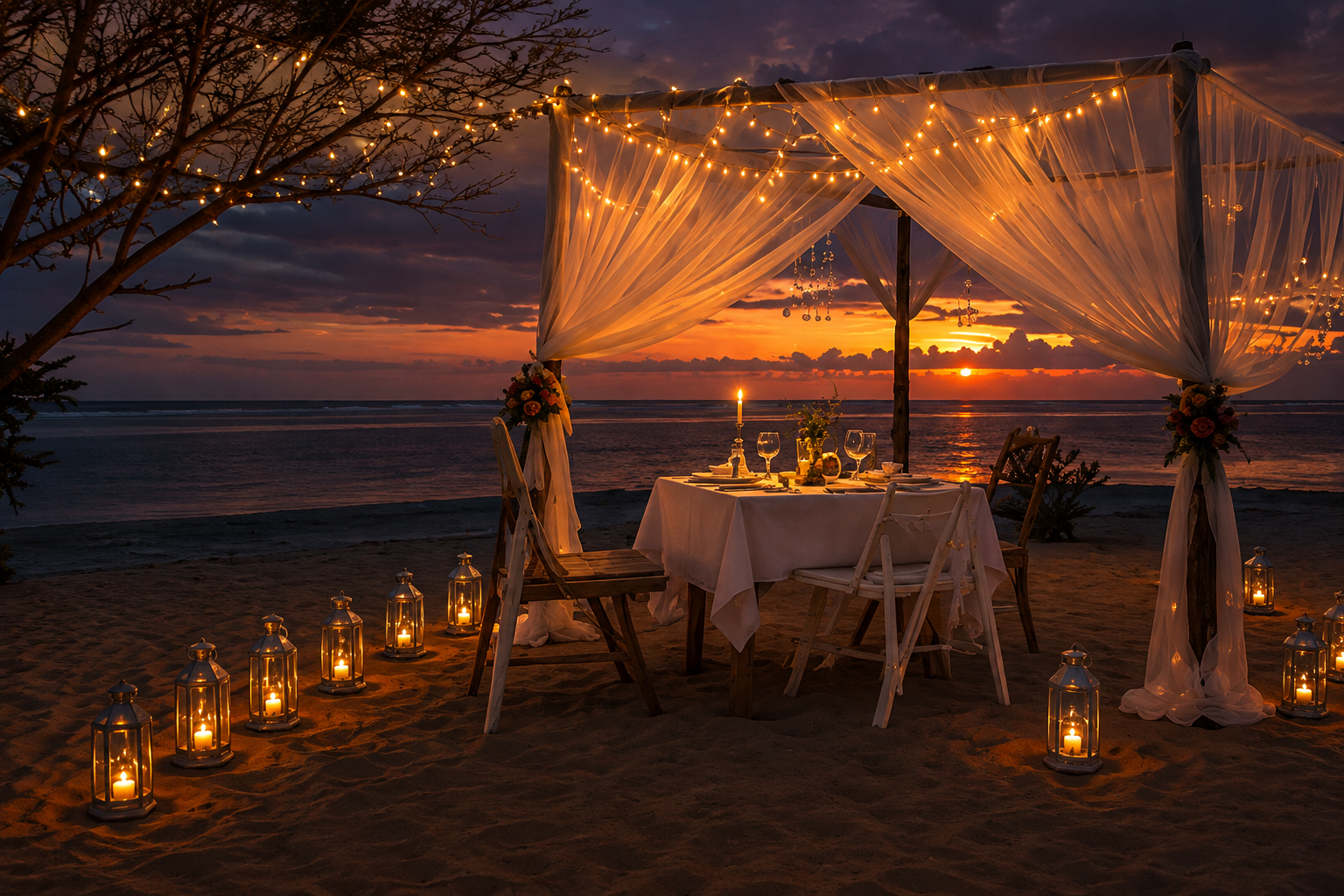
- Say you are on honeymoon at booking. Mauritian resorts are among the most generous anywhere — upgrades, a private dinner on the beach, champagne and a decorated room are routine.
- Ask about the wedding or renewal-of-vows package even if you are already married. Many resorts include a ceremony free with longer stays.
- Check whether the resort’s beach is swimmable at all tides — most are, thanks to the lagoon, but a few south-coast properties are not.
- Half board in the north, all-inclusive elsewhere is usually the right call.
- Book a sea-view room, not garden view. It is the one upgrade in Mauritius that is consistently worth the money.
Mauritius Honeymoon Questions
How much does a Mauritius honeymoon cost?
Between US$4,500 and US$12,000 per couple for ten nights including flights from Europe. A solid four-star all-inclusive resort starts around US$4,500. A five-star beachfront property with a sea-view suite runs US$8,000 to US$12,000. Top villas with butler service can exceed US$25,000. Mauritius is substantially cheaper than Seychelles for a comparable standard of resort.
Which side of Mauritius is best for a honeymoon?
The north around Grand Baie and Trou aux Biches is the most convenient, with calm water and plenty of restaurants outside the resorts. The west, including Le Morne and Flic en Flac, has the best sunsets and the most dramatic scenery. The east around Belle Mare has arguably the best beaches and the most seclusion, but is breezier, which is welcome in summer and cool in winter. The south is the wildest and greenest, with fewer resorts.
When is the best time to visit Mauritius?
September to early December, and April to June. These months are dry, warm and calm, with light winds. Avoid January to March, which is cyclone season with the heaviest rain and roughest seas — a direct hit is uncommon but disruption is not. July and August are pleasant but cooler and windier, especially on the east coast.
Is Mauritius or Seychelles better for a honeymoon?
Seychelles has more dramatic scenery — the granite-boulder beaches are genuinely unmatched — but costs roughly twice as much and has fewer large resorts. Mauritius has better all-inclusive value, more polished resort service, calmer lagoon swimming everywhere thanks to its encircling reef, and more to do beyond the beach. Choose Seychelles for the most beautiful setting, Mauritius for the easiest and best-value luxury.
Is Mauritius all-inclusive worth it?
Usually yes, which is unusual among beach destinations. Many resorts sit some distance from independent restaurants, and drinks at resort prices accumulate quickly. The exception is the north around Grand Baie, where there are enough good restaurants outside the hotels that half board is often the better choice and lets you eat Mauritian food, which is a highlight of the island.
Do we need a visa for Mauritius?
No visa is required for most nationalities including UK, EU, US, Canadian and Australian passport holders — entry is granted on arrival for tourist stays. You will need a return ticket, proof of accommodation and sufficient funds. An online passenger form is sometimes required before travel, so check the current requirement close to departure.
Can we combine Mauritius with a safari?
Yes, with South Africa. There are regular flights from Johannesburg, so a Big Five safari in the Sabi Sand followed by a beach week in Mauritius is a straightforward and popular combination, typically over twelve to fourteen nights. Mauritius does not combine easily with East Africa, where Zanzibar is the natural beach half instead.
Comparing Indian Ocean islands? See Zanzibar vs Mauritius.
Start Planning Your Dream Honeymoon
Share a few details and we’ll introduce you to specialists who know your destination properly. Free, and no obligation.