Maasai Mara Honeymoon
Last updated September 2026 · By the honeymoons.africa editorial team
Big cats, private conservancies and sunrise balloons — one of Africa’s classic romantic safari destinations.
The Maasai Mara is the safari heart of a Kenya honeymoon. It offers dense wildlife, dramatic open plains, strong guiding and a wide range of romantic tented camps. The most important decision is not which camp is most luxurious, but where you stay: inside the National Reserve, or in one of the private conservancies on its northern and eastern borders. That single choice shapes how crowded your sightings feel, what activities you can do and how much you pay.
Reserve or private conservancy?
| Maasai Mara National Reserve | Private conservancies | |
|---|---|---|
| Vehicle numbers | Busier, especially at migration river crossings | Limited beds and vehicles per sighting |
| Activities | Day game drives only; off-road driving not allowed | Often night drives, guided walks and bush dinners |
| Migration access | Direct access to the Mara River crossing points | Good migration viewing in season; crossings may need a drive into the reserve |
| Price | Wider range, including better-value camps | Generally higher; conservancy fees usually included |
| Best for | Couples prioritising river crossings or budget | Most honeymooners — privacy and variety |
For most honeymoons the conservancy premium is worth it. A split stay — two nights near the river in peak season, then two nights in a conservancy — gives you both the spectacle and the quiet.
Where to stay in the Maasai Mara
Mara Triangle
The western section of the reserve between the Mara River and the Oloololo Escarpment. It is well managed, generally less congested than the central reserve and close to several crossing points.
Central reserve: Talek and Sekenani
Classic big-cat country with plenty of camps. It is convenient and well connected, but also the busiest part of the Mara, particularly in August.
Musiara and the northern reserve
Marsh and riverine areas famous for lion prides and strong year-round game, with good access to the river in migration season.
Northern and eastern conservancies
Olare Motorogi, Mara North, Naboisho, Ol Kinyei and neighbouring conservancies are the private, low-density option. Camps are small, many are owner-run, and walking and night drives turn the safari into more than time in a vehicle.
For named camps and lodges, see our shortlist of the best Kenya honeymoon resorts and lodges.
Best time for a Maasai Mara honeymoon
| Months | What to expect | Verdict |
|---|---|---|
| Jul – Oct | Great Migration herds in the Mara; river crossings possible; peak rates and more vehicles | Most spectacular |
| Jan – Mar | Dry, warm, excellent resident wildlife, calmer camps | Best balance |
| Nov – mid-Dec | Short rains, green plains, good value outside the festive season | Good value |
| Apr – May | Long rains; some camps close, others offer strong rates | For flexible couples |
| June | Drying out, herds often arriving late in the month | Good shoulder month |
Crossing timing varies every year with rainfall, so treat July to October as a window rather than a guarantee. For month-by-month detail across the whole country, see the best time for a Kenya honeymoon.
Do you need the migration?
No. The Mara has excellent resident wildlife year-round, including lion, leopard, cheetah, elephant and buffalo. The migration adds scale and drama, but a quieter February safari in a conservancy can feel far more romantic than a crowded August crossing. If river crossings are your priority, book early, allow at least three full days near the river and accept that nature does not run to a schedule.
How much does a Maasai Mara honeymoon cost?
| Style | Per person, per night | What it buys |
|---|---|---|
| Mid-range | US$350 – 600 | Comfortable tented camp, shared game drives, full board |
| Premium conservancy | US$700 – 1,200 | Small camp, private-feeling sightings, walks and night drives |
| Top-tier | US$1,500+ | Flagship camps, private vehicle, exclusive-use options |
Rates usually include meals and game drives. Check carefully whether reserve or conservancy fees are included: Maasai Mara National Reserve entry is charged per person per 24 hours and is higher in peak season, so it adds meaningfully to a four-night stay. Budget separately for the return flight from Nairobi, a balloon safari (roughly US$450–600 per person including breakfast) and tips. Full budgets are in our Kenya honeymoon cost guide.
Getting to the Maasai Mara
Most honeymooners fly. Scheduled light aircraft leave Nairobi’s Wilson Airport several times a day for airstrips across the reserve and conservancies, taking roughly 45 to 75 minutes depending on stops, and your camp collects you from the strip. Driving takes around five to six hours each way and uses up most of a day. Many itineraries also connect by air directly to the coast, so you do not need to overnight in Nairobi again.
Best Maasai Mara honeymoon experiences
- Private game drive so you control the pace and stay as long as you like at a sighting.
- Hot-air balloon safari at sunrise, finishing with a bush breakfast.
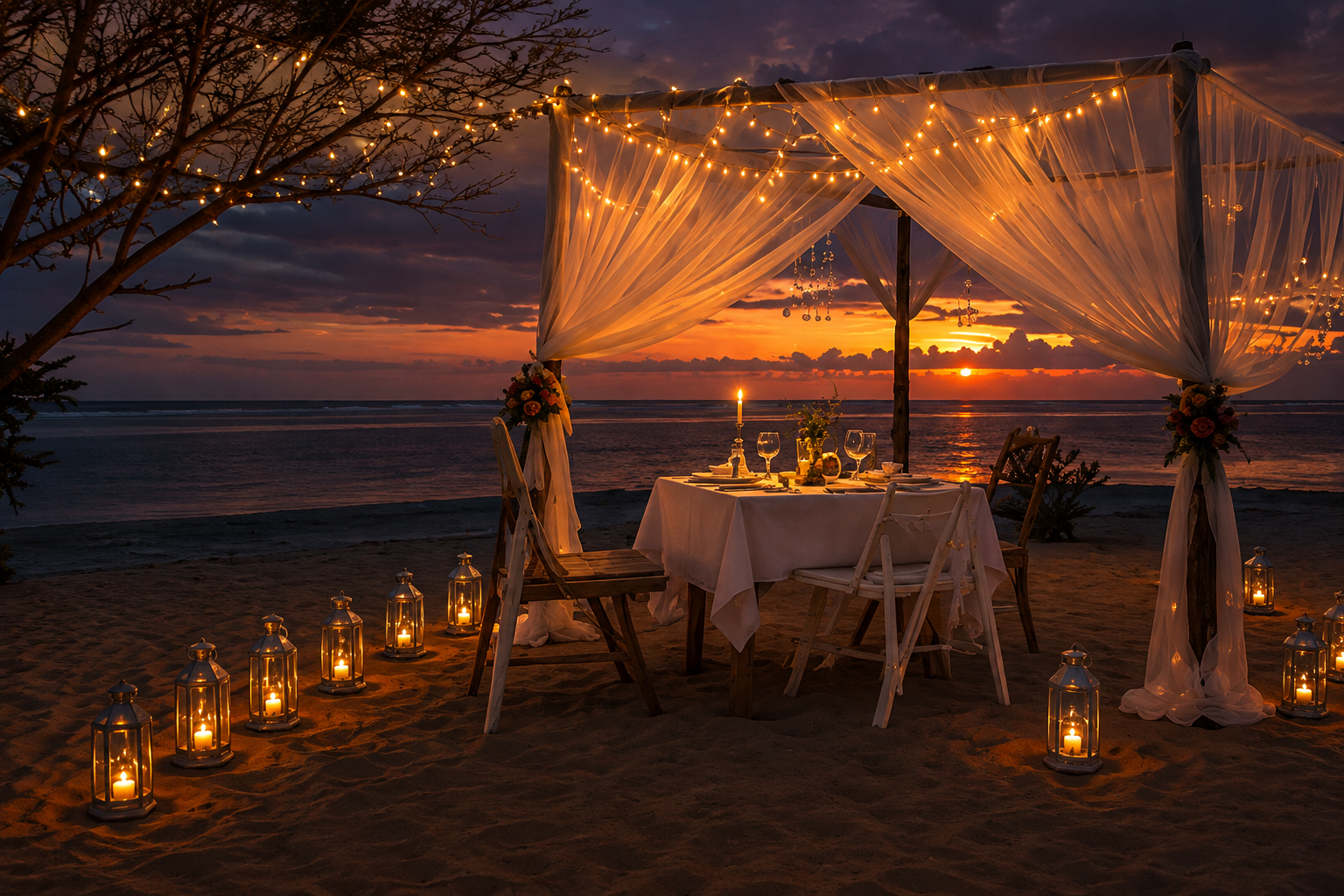
- Private bush breakfast or a lantern-lit bush dinner.
- Safari sundowners on a quiet ridge.
- Guided walks and night drives in a conservancy.
- A visit with Maasai community guides, arranged respectfully through your camp.
How many nights in the Maasai Mara?
Three nights is the practical minimum, because arrival and departure flights eat into your first and last days. Four nights is the sweet spot for a honeymoon. Five makes sense in migration season or if you split between the reserve and a conservancy.
A four-night Mara honeymoon
- Day 1: Morning flight from Nairobi, lunch at camp, afternoon game drive and sundowners.
- Day 2: Full day with a picnic, following the best sightings.
- Day 3: Sunrise balloon and bush breakfast, afternoon at camp, night drive.
- Day 4: Guided walk, afternoon drive and a private bush dinner.
- Day 5: Early drive, then fly to the coast.
Best beach pairings
The classic combination is the Mara followed by the Kenyan coast: Diani is the easiest, Watamu has the strongest marine life and Lamu gives the most atmospheric finish. For a two-country honeymoon, see Kenya and Zanzibar, Kenya and Seychelles or Kenya and Mauritius. Weighing the Serengeti instead? Read Kenya vs Tanzania.
Your dates determine where the best value and wildlife access are. A specialist can match the right conservancy or reserve area to your trip — free, with no obligation.
Get Kenya proposalsMaasai Mara Honeymoon Questions
How many nights should honeymooners spend in the Maasai Mara?
Four nights is ideal for most couples. Three works for a short trip, while five gives more flexibility in migration season or for a split between the reserve and a private conservancy.
Are private conservancies worth it for a honeymoon?
Usually yes. Conservancies limit beds and vehicles, and many allow night drives, guided walks and bush dinners, which the National Reserve does not. They cost more, but the privacy suits a honeymoon.
When is the Great Migration in the Maasai Mara?
The main herds are typically in the Maasai Mara from around July to October. River crossing timing varies each year with rainfall, so allow several days near the Mara River if crossings are a priority.
How much does a Maasai Mara honeymoon cost?
Mid-range camps start around US$350 to 600 per person per night, premium conservancy camps around US$700 to 1,200, and top-tier camps can exceed US$1,500. Reserve or conservancy fees, flights from Nairobi and a balloon safari are often extra.
How do you get to the Maasai Mara from Nairobi?
Most couples take a scheduled light-aircraft flight from Nairobi Wilson Airport, which takes about 45 to 75 minutes. Driving takes around five to six hours each way.
Is a balloon safari worth it on a honeymoon?
For most couples, yes. A sunrise balloon flight over the Mara followed by a bush breakfast is one of the most memorable honeymoon experiences in Kenya, typically costing around US$450 to 600 per person.
Start Planning Your Dream Honeymoon
Share a few details and we’ll introduce you to specialists who know your destination properly. Free, and no obligation.