Best Time for a Botswana Honeymoon
Last updated September 2026 · By the honeymoons.africa editorial team
A month-by-month guide to Okavango floodwater, dry-season wildlife, Chobe, the Kalahari, heat, rain, crowds and price.
Month-by-month guide
The short answer
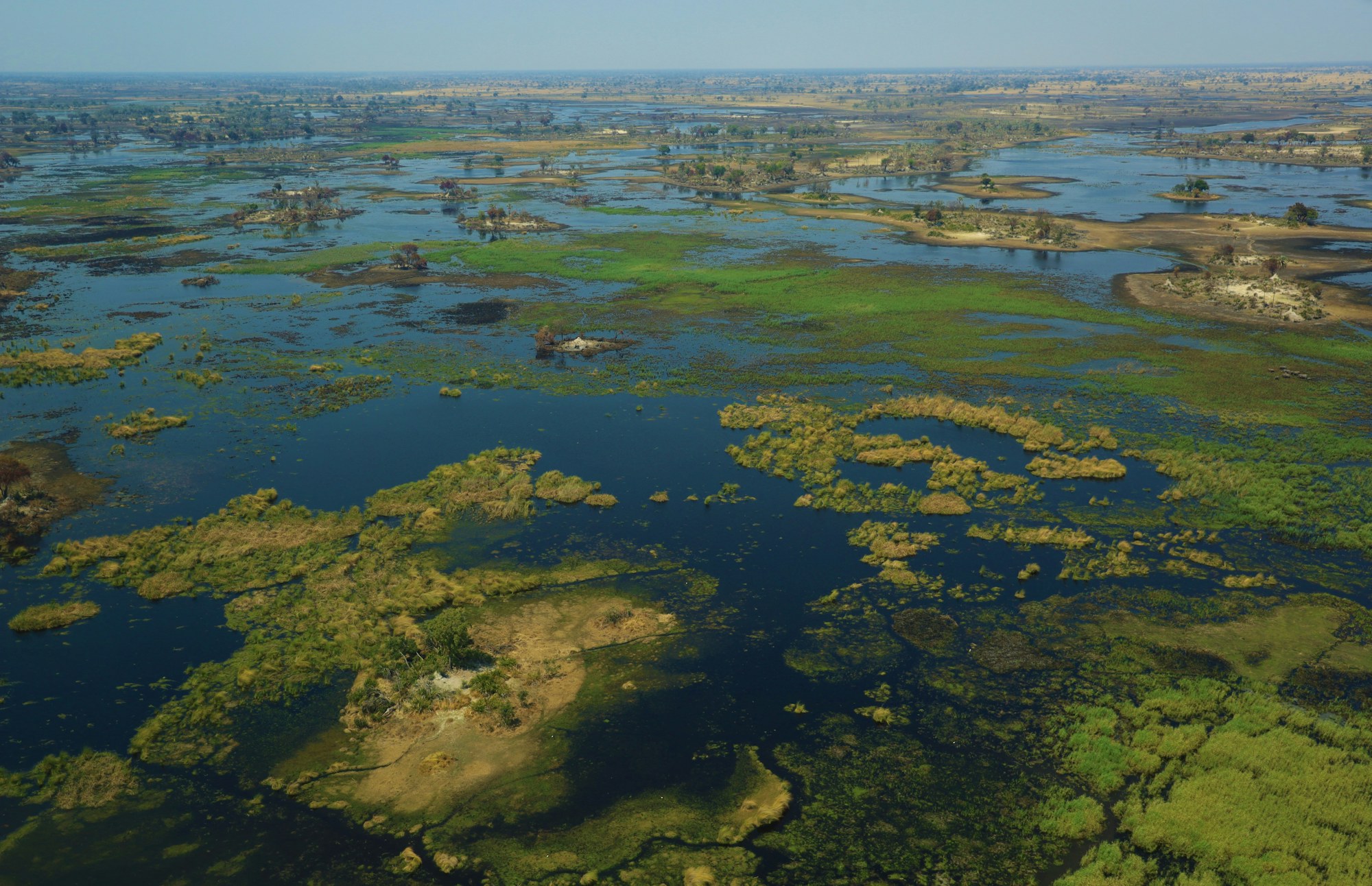
Botswana is unusual because its two major seasonal systems move in opposite directions. Local rainfall falls mainly in the hot summer months, while the Okavango’s main floodwater arrives later during the dry winter. Water originating far upstream in Angola moves slowly across the Delta, so a camp can have clear blue winter skies and rising flood levels at the same time.
That is also why there is no single “best month” for every honeymoon. A couple prioritising mokoro and cool mornings should choose differently from one prioritising low rates, newborn animals or Makgadikgadi.
Best months at a glance
| Priority | Best period | Why |
|---|---|---|
| Best overall first honeymoon | Jun–Sep | Dry weather, strong wildlife, classic Delta flood conditions in many areas. |
| Best value without deep green season | Apr–May, Nov | Shoulder pricing, fewer guests and often very good safari conditions. |
| Best water-led Okavango experience | Jun–Aug | Floodwater is typically well established across much of the Delta, but exact camp conditions vary. |
| Best concentrated game viewing | Aug–Oct | Dry conditions push wildlife toward permanent water; September is especially strong. |
| Best for Chobe elephants | Jul–Oct | Dry-season concentration along the Chobe River becomes dramatic. |
| Best Kalahari / Makgadikgadi | Dec–Mar | Summer rain transforms the pans and grasslands; zebra and wildebeest can move through. |
| Lowest-rate season | Jan–Mar | Green-season camp pricing can be dramatically below peak rates. |
| Most difficult heat | Oct | Outstanding wildlife but temperatures can become extreme before summer rains break. |
Month by month
January
Green seasonLow ratesHot, humid and one of the wetter months. Afternoon storms are common, landscapes are green and birdlife is excellent. Delta wildlife is more dispersed than in the dry season, but Kalahari and Makgadikgadi become much more interesting.
Honeymoon verdict: best for value, photography and Kalahari contrast rather than classic dry-season safari.
February
Peak rainsKalahari strongAlong with January, February is one of the peak rainfall months in Botswana. The pans may hold water in good-rain years, plains game can be moving through greener landscapes and migratory birds remain strong.
Honeymoon verdict: atmospheric and cheaper, but weather variability is part of the deal.
March
Green seasonShoulder approachingStill hot with summer storms possible, but the transition toward the drier part of the year begins. It can be an attractive month if you want green landscapes without the deepest January/February wet-season feel.
Honeymoon verdict: good for value-conscious couples willing to accept variable roads and water conditions.
April
UnderratedShoulder valueOne of our favourite compromise months. Rainfall falls away, temperatures become more comfortable, landscapes remain green and camp rates can still be materially below winter peak season.
Honeymoon verdict: one of the best value-to-experience months.
May
Dry beginsCoolerWinter and the dry season begin. Days are generally clear and comfortable, nights get much colder, vegetation starts opening up and floodwater is progressing through the Delta.
Honeymoon verdict: excellent if you want strong conditions before June–August pricing and coldest mornings peak.
June
Peak safariCold morningsDry, clear and increasingly strong for both water-based Delta experiences and game viewing. Dawn drives can feel surprisingly cold; layers matter.
Honeymoon verdict: one of the safest choices for a first Botswana honeymoon.
July
Classic BotswanaHigh pricesPeak winter safari conditions. Floodwater is usually established across much of the Delta, grass is lower, wildlife visibility is strong and Chobe’s riverfront becomes increasingly productive.
Honeymoon verdict: outstanding, but pay the premium only if classic conditions matter more than value.
August
Best wildlifeDelta + ChobeDry, sunny and one of the most reliable safari months. Wildlife concentrates near permanent water while Delta water remains a central part of the experience in many areas.
Honeymoon verdict: arguably the strongest pure safari month, with peak rates to match.
September
Our all-round pickWarmerExcellent wildlife, very little rain and warmer mornings than mid-winter. The landscape is dry, animals concentrate strongly around water and Chobe can be exceptional.
Honeymoon verdict: our broad all-round favourite if budget allows.
October
Exceptional gameVery hotWildlife concentration can be superb, but this is the month where heat tolerance matters. Temperatures can climb toward 40°C and occasionally above before summer rains arrive.
Honeymoon verdict: excellent for game viewing; poor choice for couples who dislike heat.
November
Shoulder valueFirst rainsThe first meaningful rains often arrive, transforming dust into green remarkably quickly. Rates can fall, migrant birds return and storm light can be beautiful. Exact onset varies from year to year.
Honeymoon verdict: one of the smartest value months if you accept heat and rain uncertainty.
December
GreenFestive premiumWarm, increasingly green and more humid. Wildlife is less concentrated around permanent water, while Kalahari destinations become increasingly relevant. Christmas/New Year can erase some green-season savings.
Honeymoon verdict: good for green-season atmosphere; avoid festive dates if value is the objective.
Understanding the Okavango flood
The Okavango does not flood because Botswana is raining heavily in June or July. Most of the floodwater originates in the Angolan highlands. In the upper Delta the annual flood peak arrives much earlier, then the flood wave moves slowly through the system and can take roughly three to four months to travel toward Maun.
That delay creates Botswana’s famous paradox: the Delta can be at its most watery during Botswana’s driest months. It is why June–August is so attractive for honeymooners who want mokoro and boating alongside dry-season game viewing.
Best time by safari area
| Area | Strongest period | Why |
|---|---|---|
| Okavango water camps | Jun–Aug | Strong combination of dry weather and seasonal floodwater in many areas. |
| Okavango land concessions | Jun–Oct | Vegetation thins and wildlife concentrates. |
| Moremi | May–Oct | Excellent classic dry-season wildlife; road conditions generally easier than summer. |
| Chobe Riverfront | Jul–Oct | Very large dry-season elephant and buffalo concentrations near the river. |
| Savute / Linyanti | Jun–Oct | Strong dry-season predator and big-game viewing. |
| Makgadikgadi / Nxai Pan | Dec–Mar | Summer rains can transform the pans and surrounding grasslands, attracting zebra, wildebeest and birdlife. |
| Central Kalahari | Jan–Apr | Green-season wildlife, dramatic skies and more comfortable pricing than peak Delta season. |
Best time for Chobe
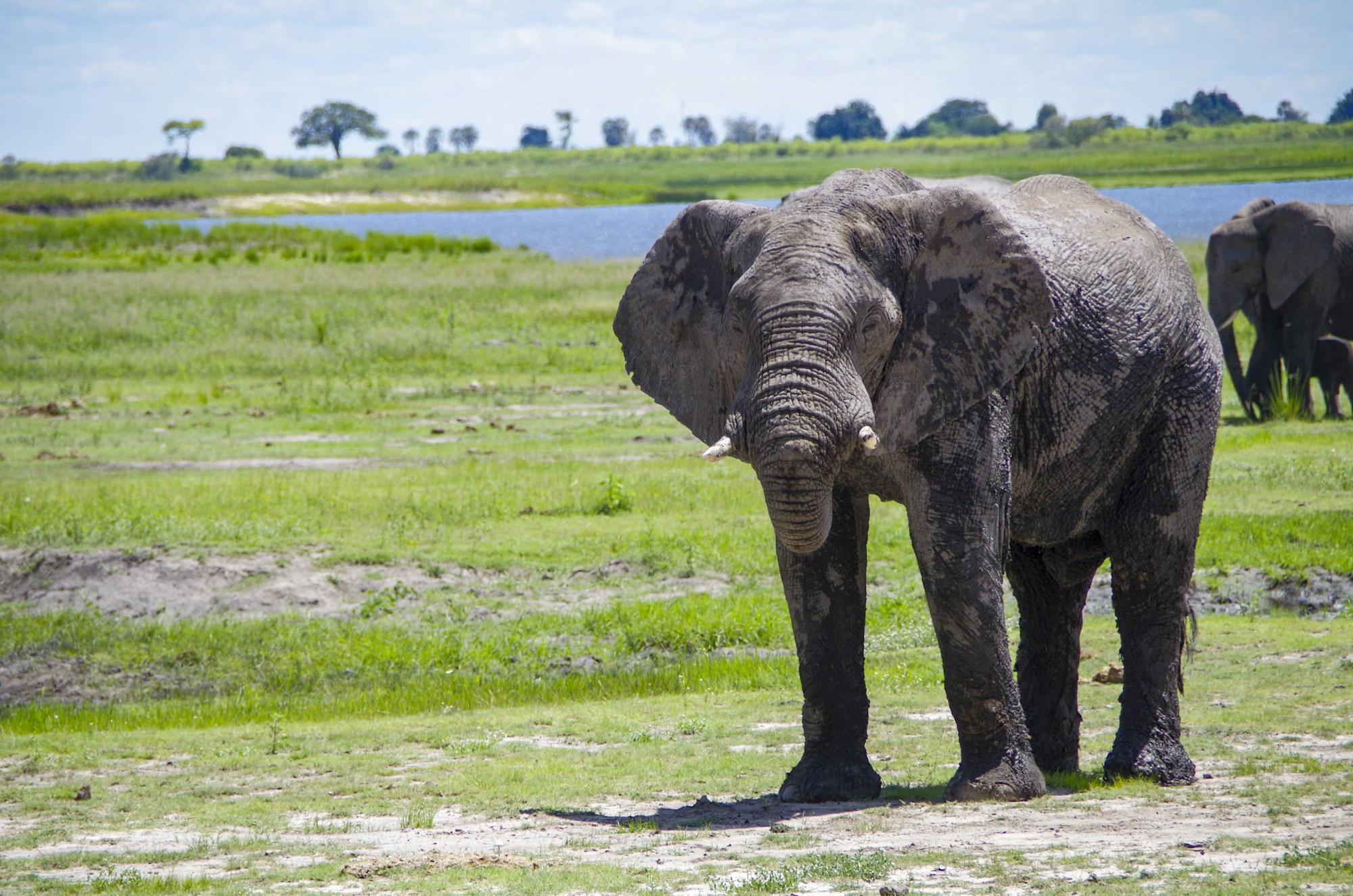
Chobe is strongest when Botswana is dry and animals depend increasingly on permanent water. July to October is the classic period for the riverfront, with very large elephant herds and productive boat safaris. September is particularly attractive because game density is high but mornings are usually warmer than June or July.
November through March is greener and less crowded. The trade-off is that animals are more widely distributed because temporary water returns to the landscape.
Best time for Makgadikgadi and the Kalahari
This is almost the opposite of the Delta. Botswana Tourism notes that heavy summer downpours, especially around February and March, can transform the Makgadikgadi pans and surrounding grasslands. In good-rain years, zebra and wildebeest move through and flamingos can gather where water persists.
For couples adding Jack’s Camp or a Kalahari stay, January to March can be a feature rather than a compromise. The same months that are less reliable for a classic Delta honeymoon can be the reason to travel to the desert.
Price and crowd strategy
The strongest wildlife months are also the most expensive. Current 2026 lodge pricing shows how dramatic the difference can be: our Botswana honeymoon cost guide compares peak and green-season rates and shows why simply moving a four-night stay out of June–October can save several thousand dollars.
- Best value without going fully green season: April, May and November.
- Best classic safari, price secondary: July–September.
- Best for lower rates and photography: January–March.
- Worst month for heat-sensitive couples: October.
- Watch festive pricing: late December can be expensive even though it is technically green season.
Which month should you choose after your wedding?
| Wedding month | Our advice |
|---|---|
| January–February | Embrace green-season Botswana and consider adding Makgadikgadi rather than trying to recreate a dry-season safari. |
| March | Good value; keep routing flexible and favour camps with reliable access. |
| April | Excellent compromise month. Strong recommendation. |
| May | Very good. Cooler, drier and often better value than deep peak season. |
| June | Excellent; pack properly for cold dawn drives. |
| July–August | Peak Botswana. Book early and expect the highest rates. |
| September | Our broad favourite: strong game viewing, dry weather and warmer mornings. |
| October | Only choose if you tolerate serious heat well. |
| November | Smart value choice; accept uncertain timing of the first rains. |
| December | Good for green-season travel; avoid festive dates if cost matters. |
2026 flood conditions versus long-term timing
Use the month-by-month guide as a planning framework, not a promise. Botswana experienced unusually high water in parts of the Okavango during 2026, including temporary Moremi access disruption earlier in the year. Annual flood strength and timing vary with rainfall far upstream, local rainfall, channel conditions and the time it takes water to move through the Delta.
That variability is not a reason to avoid Botswana. It is a reason to choose the exact camp for the exact month instead of booking “the Okavango” as if it were one uniform environment.
Tell us your wedding date, budget and whether water activities, predators or value matter most. The right Botswana month depends on the experience you want.
Plan BotswanaBotswana honeymoon timing questions
What is the best month for a Botswana honeymoon?
September is our broad all-round pick because game viewing is excellent, rainfall is very low and mornings are warmer than in June or July. June to September is the strongest overall first-honeymoon window.
When is the Okavango Delta most flooded?
Flood timing varies across the Delta. Water enters the upper system earlier and can take roughly three to four months to move toward Maun. Many central and lower Delta areas have strong seasonal water during the dry winter months, which is why June to August is a classic honeymoon window.
Is green season good for a Botswana honeymoon?
Yes, especially for couples who value lower rates, green landscapes, birds, dramatic skies and the Kalahari. January to March is hotter and wetter and wildlife can be more dispersed, so it is a different safari rather than a cheaper copy of peak season.
Is October too hot for Botswana?
It can be. October often has excellent wildlife concentration but daytime temperatures can approach or exceed 40°C before the summer rains arrive. Heat-sensitive couples should favour September or wait for November.
When is Chobe best for elephants?
July through October is the classic dry-season period when elephants and other wildlife concentrate strongly along the Chobe River.
What is the best-value month for Botswana?
April and November are especially good compromises. Camp rates can be lower than in peak winter, visitor numbers fall and safari quality can still be excellent. January to March can be cheaper still if you actively want green-season conditions.
Botswana Tourism climate guidance · Botswana Tourism time to visit · Government of Botswana climate and seasons
Start Planning Your Dream Honeymoon
Share a few details and we’ll introduce you to specialists who know your destination properly. Free, and no obligation.